
What Decides a Coin’s Value
Yes. A gold coin can have value in three different ways: melt value (the gold inside the coin), bullion value (the gold plus a small extra amount), or numismatic (collector) value (what a collector is willing to pay). Most inherited gold coins are worth their melt or bullion value. Only a few are rare enough to have a high numismatic (collector) value.
If you inherited a coffee tin or an envelope full of coins from your parents or grandparents, you may wonder, “Are these coins worth any money?” Finding out what your old coins are worth doesn’t take any special expertise; a few simple checks will tell you.
You can look at your coins to see whether their value comes from their metal content, bullion value, or collectible value. You’ll also learn how to check which category your coins may fall into and which Canadian coins are worth a second look. The next 3-step self-check will also help you decide which value bucket your coins belong to before you try to price or sell them.
Face Value vs. Real Value: The Three Things That Decide Gold Coin Value
The number on the front of a coin, such as $1, $5, or $50, is usually not its real value. The number on a coin’s face, $1, $5, or $50, is only its printed face value. The coin may be worth far more because of its gold, silver, rarity, or condition. The face value is just the amount printed on the coin, not what the coin is actually worth.
To find a coin’s real value, compare it against three possible values and use whichever is highest.
- Melt Value: The market price of the raw precious metal inside the coin.
- Bullion Value: Melt value plus the normal minting and distribution cost.
- Numismatic Value: A coin can be worth more if it is old, if only a few were made, or if it is in excellent condition.
Understanding these three values is the key to judging any coin collection. The next three sections will explain each one.
Bucket 1 — Melt Value: What the Metal Alone Is Worth
The melt value is the starting point for pricing any precious metal coin. To put it simply, the melt value of coins is how much the pure gold or silver in the coin is worth. You figure that out by looking at the coin’s pure metal weight and multiplying it by the current CAD spot price for gold or silver. That number is the lowest price the coin can have. So, a coin made of gold or silver is never completely worthless. It’s always worth at least the value of the metal inside.
Purity, or fineness, is very important when figuring out a coin’s value. A one-ounce Canadian Gold Maple Leaf is 99.99% pure gold. That means it’s almost all gold. But older coins used in everyday trade usually contain a mix of metals. Canadian silver coins from before 1968 are not pure silver. They are silver alloys, meaning silver mixed with other metals. So, the purity affects how much the metal itself is worth.
To figure out the melt value of a coin, you need to know its weight and how pure the gold or silver is. There isn’t a fixed price. The value changes every day because the market price of gold and silver changes. Knowing this helps you understand the minimum worth of your coin.
Bucket 2 — Bullion Coins: Metal Plus a Premium
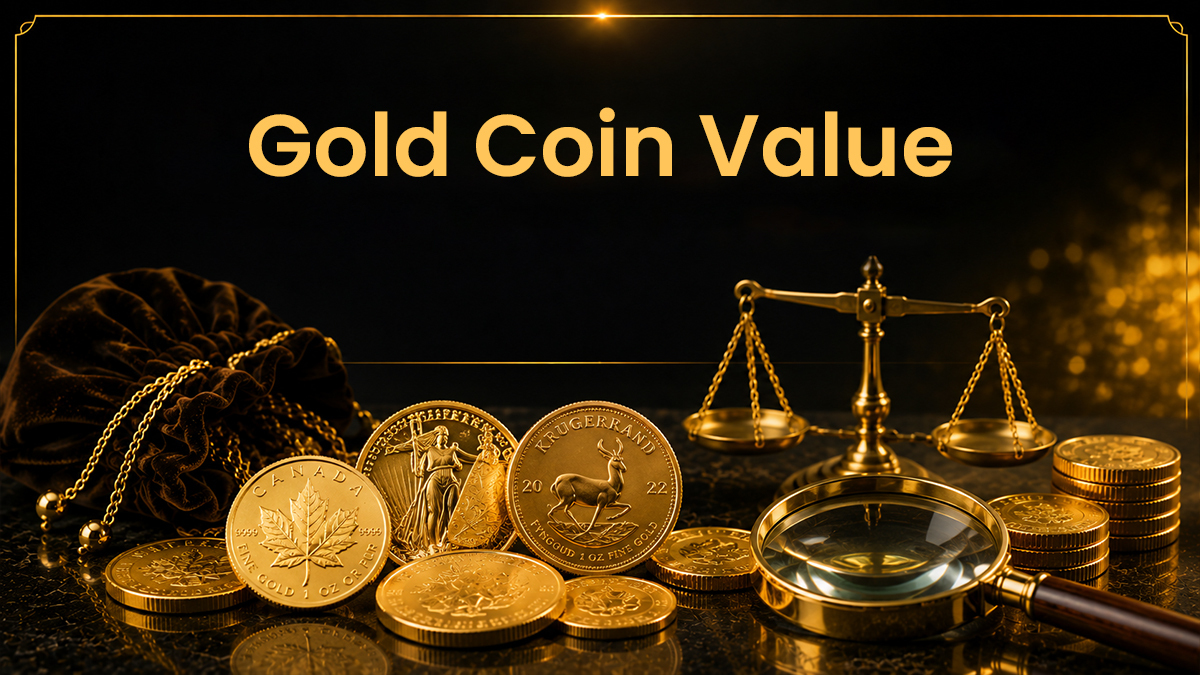
Unlike rare collectible coins, modern bullion coins like the Canadian Maple Leaf, Krugerrand, American Eagle, and British Britannia are priced mainly by the amount of gold or silver they contain, plus a small dealer markup above the daily market price. They’re not usually valued for rarity but for raw metal weight.
This is where the gold Maple Leaf coin value is easiest to understand. These coins are made with 99.99% pure gold. Because these coins are produced in large numbers for investors, they don’t carry a rarity premium, and their price tracks the gold content plus a small market markup. The year it was made doesn’t usually change the price much. That’s because these coins are bought and sold mainly for their gold content, not because they are rare.
These popular bullion coins are easy to recognize, price, and trade anywhere in Canada because their value mainly follows the current metal market.
Bucket 3 — Numismatic Value: When a Coin Beats Its Metal
Numismatic value is when a coin is worth much more than just the value of its metal. This extra value comes from things like rarity, few were made, important history, mint mistakes, or excellent condition. This is where famous rare Canadian coins worth money can be found, and they can sell for high prices with dedicated collectors.
Most coins people inherit are only worth their metal content value or standard bullion value. Truly valuable collector coins are rare. When a rare coin does appear, its physical condition matters most. Even a tiny scratch or small sign of wear can greatly change its grade and value.
Note: Never clean an old coin. Telling real mint errors or rare varieties apart takes a lot of experience. Most people can’t judge a coin’s collectible value on their own. If you think you have a valuable coin, the best way is to have a professional coin expert look at it in person. Only then can you know if it’s truly collectible and worth a high price. During the evaluation, the expert checks details such as the coin’s strike quality, mint marks, possible doubled dies, and overall condition. These small details can make a significant difference in determining whether a coin has true numismatic value.
The Canadian Coins Actually Worth Checking For
Instead of looking through long lists of rare auction results, you can quickly check your coins by using three simple categories.
1. Modern Bullion Coins
- Gold & Silver Maple Leafs:
Gold Maple Leaf coins are made from very pure gold. Their value mostly comes from the gold inside, plus a small extra fee the dealer charges. This is why the gold Maple Leaf coin value usually depends on the gold content rather than the year the coin was made.
- Gold Sovereigns:
Old British gold coins kept in Canada are mostly valued for how much gold they actually contain.
2. Melt & Vintage Silver Coins
- Pre-1968 Canadian Silver:
Canadian dimes, quarters, half dollars, and dollar coins made between 1920 and 1966 are 80 percent silver. Some coins made in 1967 and 1968 are 50 percent silver. Their value mostly depends on the silver inside them, which changes with the silver market price.
3. Genuinely Rare Checkpoints
- Famous Rarities:
Some key Canadian coins that collectors really look for include the 1948 silver dollar, the 1936 dot cent, and the low-mintage 1921 5-cent and 50-cent coins, based on recognized Canadian coin references. These are true collector items. Because so few were made, they can be worth a lot. These are some of the rare Canadian coins worth money that collectors continue to look for.
- Verification over Self-Appraisal:
If you notice these exact dates, don’t try to put a price on them yourself. These rare Canadian coins can be worth a lot more than their metal value.
| Coin / Group | Valuation Bucket | Why It Matters |
| Gold & Silver Maple Leafs | Bullion | Pure metal weight (.9999) + small market premium |
| Pre-1968 Canadian Silver | Melt / Junk Silver | High intrinsic silver content (80% pre-1967; 50% 1967–68) |
| Key Rare Dates (e.g., 1948, 1921) | Numismatic | Collector demand drives value well above precious metal content |
How to Tell Which Bucket Your Coin Is In
To find out what your coin is worth, follow this simple 3-step process.
STEP 1 Is it a recognizable modern bullion coin
If you have a modern coin, like a gold or silver Maple Leaf, a Krugerrand, or a Britannia, it goes in the bullion group. The value follows the real-time price of precious metals, so it’s easy to price and sell.
STEP 2 Is it a pre-1968 Canadian silver circulation coin
Dimes, quarters, half dollars, and dollars from before 1968 usually are worth their silver content. Unless they are an extremely rare date or in perfect condition.
STEP 3 Is it old, unusual, an error coin, or something you can’t identify
If a coin looks very old, has a clear mint mistake, or you can’t tell what it is, it might fit into bucket 3. That’s the numismatic category.
As you go through these steps, check these details on every coin:
- Country & Denomination: Check if it’s a regular circulation coin or a bullion coin.
- Date: Important for spotting silver coins made before 1968 or very rare mint years.
- Magnet Test: A quick way to check a coin is to use a magnet. Gold and silver are not magnetic.
- Wear & Condition: If an old coin looks like it’s in great condition, it might belong in the numismatic category.
Two Mistakes That Quietly Cost Owners Money
When people find hidden gold coins, they often make mistakes that lower the money they get for them. Avoid these two common mistakes to keep the value of your coins.
Cleaning your coins
It’s tempting to clean an old coin to make it shiny again, but that’s a big mistake. Cleaning a coin scratches its surface and removes its natural look. Collectors actually value old coins more when they look natural, not polished. Keep coins just the way they are.
Selling them completely blind
Don’t take your coins to a shop before you know what you have. First, put them into the right groups. If you treat rare collectible coins like they are just metal value, you could lose a lot of money. Take a little time to sort your coins first so you know if you are selling:
- just the metal value,
- normal bullion value, or
- a true collector rarity.
Getting an Accurate Valuation and Selling
How much money you get for your coins depends on which group they belong to. If your coins are worth only their metal value or are standard bullion coins, it is easy to find their value. You only need to check the current price of gold or silver in Canada and compare it with the amount of pure metal in your coin.
If you think your coin is a rare collector’s coin, you can’t just use an online calculator. An expert needs to see it in person to check its condition, make sure it’s real, and spot any rare mint errors. If you want to sell old silver coins or gold coins safely in the Greater Toronto Area, getting an in-person evaluation is best. Trusted precious metal buyers, like GTA Gold Buyers in Whitby or Burlington, can check your coins and tell you what they’re really worth before you sell.
Conclusion
Finding out what your old coins are worth starts with putting them into the right bucket. Once you know whether your coin has melt, bullion, or collector value, you can make a more informed decision. If you’re ready to sell, getting an accurate valuation is the best next step.
Frequently Asked Questions
Yes. Old coins can be worth a lot, but their value depends on three different things. Most coins are worth only their metal value, like the gold or silver inside. A few coins are worth more because collectors want them, especially rare dates or coins with mint mistakes. If you inherit coins, most will be worth their metal value, but a small number might be collector coins worth much more.
To find the melt value of a coin, multiply the amount of pure gold or silver in the coin by the current market price in Canadian dollars. Most old circulating coins are not pure metal. For example, many Canadian silver coins made before 1968 have silver mixed with other metals. So you need to calculate the value based on how much pure silver is in the coin, not its total weight.
No. An older date usually does not make a standard Canadian Gold Maple Leaf coin more valuable. These coins are made as standard bullion coins. Their value comes mainly from the amount of pure gold they contain, plus a small dealer premium. A Gold Maple Leaf made many years ago is usually worth about the same as one made this year, as long as they have the same gold weight and purity.
No. You should never clean an old coin. Cleaning can damage the coin and lower its value. It removes the coin’s natural surface, which collectors like, and can leave tiny scratches. A rare coin can lose much of its collector value after cleaning and may be worth only the value of the gold or silver inside it.