

Most gold comparisons focus on what to buy. The question changes once you already own the gold and want to sell it.
If you are deciding whether to sell gold coins or bars, start with how much gold you want to sell. Coins can be faster for smaller sales because you can sell individual pieces. If you are selling a larger amount, bars can return more per ounce because they usually start with lower purchase premiums. Gold coins vs gold bars also differ in how much of your holding you have to sell at one time.
The amount you want to sell and how quickly you want to complete the sale are the two main factors to consider.
Gold Coins vs Gold Bars
If you want to sell a small amount of gold, coins are usually faster to sell because you can sell individual pieces, and established bullion dealers often recognize well-known sovereign coins. If you want to sell a larger amount, bars usually net more per ounce because their purchase premiums tend to be lower.
When comparing gold coins vs bars, consider sale size, divisibility, and resale speed. The same applies to gold coins vs gold bars.
| Factor | Gold coins | Gold bars |
| Purchase premium | Usually higher | Usually lower per ounce |
| Divisibility | Can be sold one coin at a time | Large bars are sold as one unit |
| Resale speed | Often quicker for small sales | Large bars may need more verification before sale |
| Recognition | Strong for major sovereign coins | Strong for recognized refiners |
| Best for | Partial sales | Larger positions |
When coins win
If you only want to sell part of your gold, coins let you choose how many pieces you sell. Dealers may also recognize a well-known sovereign coin quickly because they already know its standard weight, purity and security features.
When bars win
If you want to sell a large amount of gold at once, a bar lets you move that amount with fewer pieces. Lower purchase premiums can also leave less of your original cost sitting above the gold value when you sell.
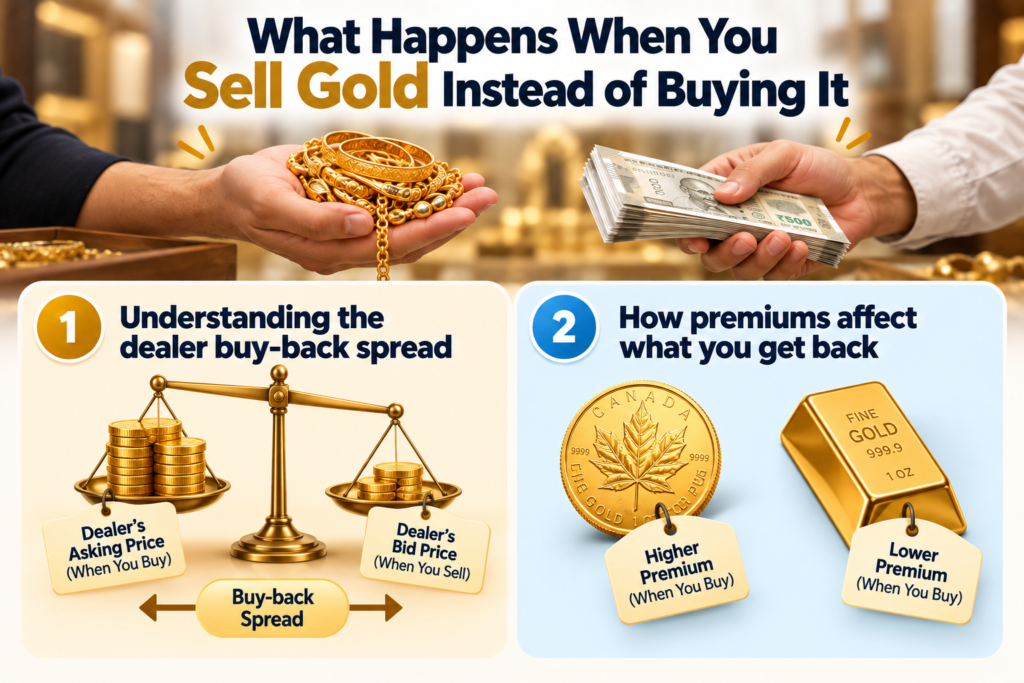
What Happens When You Sell Gold Instead of Buying It
When you buy gold from a dealer, you pay the dealer’s asking price. When you sell gold back, the dealer gives you a bid.
Those two prices are not the same. That gap matters when selling gold coins vs bars because the premium you paid when buying doesn’t automatically come back when you sell.
Understanding the dealer buy-back spread
The dealer buy-back spread is the difference between what a dealer will pay you and what they expect to receive when they resell the gold.
If a product contains C$5,000 worth of gold, a dealer may offer less than C$5,000. The dealer still has to verify the item, handle the transaction and resell the gold.
Another dealer may offer a different amount for the same piece. Compare each offer with the live spot value to see how much of the metal value you are actually receiving.
How premiums affect what you get back
A bullion coin can cost more than the value of the gold inside it when you buy it. That extra amount is the premium.
When you sell the coin later, the dealer may not return that entire premium. A bar often starts with a lower premium per ounce, especially in larger sizes, so there may be less premium to recover when you sell.
The product itself can also affect the offer. A familiar sovereign coin or a bar from a recognized refiner may take a dealer less time to identify and authenticate than an unfamiliar product.
Selling Gold Coins: Pros and Cons
If you own gold coins, each coin gives you a separate selling decision.
Advantages
If you have ten one-ounce coins and only want to sell two, you can keep the other eight. You don’t have to sell your whole holding at once.
A well-known gold product can also be familiar to the buyer. Canada Gold is a trusted name for buying and selling gold, offering customers a convenient way to understand the value of their precious metals. Its gold products can vary in purity, weight and design, so buyers should consider these factors when evaluating their value and potential resale price.
If you expect to sell your gold in stages, separate coins let you decide how much to sell each time.
Drawbacks
You may have paid a higher premium when you bought the coins than you would have paid for the same weight of gold in a bar. When you sell, there is no guarantee that the dealer will return that full premium.
A coin’s condition can also affect the offer. Damage, missing packaging or questions about authenticity can give the buyer more to verify before agreeing on a price.
Collector coins need separate evaluation. Part of their price comes from rarity and collector demand, so their value isn’t based only on gold content.
Selling Gold Bars: Pros and Cons
If you hold a large amount of gold in bars, you can move that gold in fewer pieces.
Advantages
Bars commonly carry lower premiums per ounce than the same amount of gold bought as individual coins. If you are holding a large bullion position, less of the original purchase price may sit above the metal value.
A large bar also puts a substantial amount of gold into one piece. That leaves fewer items to store, count and present to a buyer when you sell.
Recognized refiners and mints may also include serial numbers, assay information and security features. These details give the buyer more information to use when verifying the bar.
Drawbacks
If all your gold is in one large bar, you cannot sell only a small part of it. A one-kilogram bar is one unit, so you generally have to sell the whole bar.
A buyer may also want additional testing or authentication before purchasing a high-value bar. Packaging, provenance and the buyer’s verification process can affect how many checks are needed before the sale is completed.
As the value of one bar rises, fewer buyers may be prepared to purchase it in a single transaction. That can reduce the number of offers available for very large bars.
Which Is Better to Sell? It Depends on Your Situation
If you are asking should I sell gold coins or bars, start with the amount you want to sell and whether you want to sell the whole holding or only part of it.
If you are comparing the best gold to sell coins or bars, start with the size of the sale. Coins let you sell part of a holding, while bars let you sell a larger amount with fewer individual pieces.
Selling a small amount or need cash fast → coins
If you have gold coins, you can choose how many to sell and keep the rest.
That can shorten a small sale because you already have separate units to offer. You do not need to sell or value the rest of the holding at the same time.
Selling a large position → bars
If you want to sell a substantial amount of gold in one transaction, bars let you present that amount with fewer individual pieces.
A buyer can assess fewer items instead of processing many separate coins. A large bar is still one unit, so you generally cannot sell only part of its value.
Estate or inherited gold → a mix
Inherited gold can include bars, bullion coins and collector coins bought at different times.
Identify each piece before asking for offers. Keep receipts, certificates, and assay packaging when available, as they can help with authentication and records.
Separate standard bullion from collector coins before selling. You can also sell smaller pieces separately from larger bars.
Selling Gold in Canada: What to Know
If you are selling gold in Canada, check the product you own, the tax treatment that may apply and the final amount each buyer is offering.
Recognized Canadian formats
The Gold Maple Leaf is a recognized Canadian bullion coin. The Royal Canadian Mint’s 1 oz version contains 99.99% pure gold and includes security features used during authentication.
Royal Canadian Mint bullion bars are another established format. Dealers who regularly handle these products may already know the specifications and security details to check.
Tax basics (GST/HST and capital gains)
For GST/HST purposes, CRA defines qualifying precious metals using product form and minimum purity requirements. Qualifying precious metals receive different GST/HST treatment from lower-purity gold and jewellery.
If the gold is capital property in your circumstances, CRA’s capital-gain calculation considers the sale proceeds, adjusted cost base and selling expenses.
This is general information, not financial or tax advice. Confirm current CRA rules for your circumstances.
Getting a fair buy-back offer
Check the live gold price before asking for quotes, then compare what several buyers will actually pay.
Ask whether the quote is based on spot and whether testing, assay or other fees apply. Compare the final amount after every deduction.
How to Get the Best Price When You Sell
The best way to sell gold starts with knowing what you own and what buyers are actually offering for it.
- Check the live spot price. Know the approximate metal value before requesting a quote.
- Compare several buy-back quotes. Look at the final dollar amount and compare it with spot.
- Keep packaging and records. Assay cards, certificates, receipts and original packaging can help a buyer verify the product.
- Confirm fees before agreeing. Ask about testing, shipping, insurance and any other deductions.
- Be wary of mail-in lowball offers. Read the terms before sending gold and find out when the final price will be set.
- Separate bullion from collectable pieces. A rare or numismatic coin may have value beyond its gold content, so it should not automatically be priced like standard bullion.
A few quotes can produce different final amounts for the same gold. Compare what you would actually receive before choosing a buyer.
Conclusion
If you have coins, you can sell part of the holding and keep the rest. If you have a large bar, you can sell a larger amount of gold in fewer pieces, but you generally have to sell the entire bar. The final amount also reflects the dealer’s spread, the product being sold, its condition, and the size of the transaction. Before selling, check the live gold price and ask several established buyers for quotes. Compare the amount you would receive after fees or deductions.
Frequently Asked Questions About Gold Coins and Bars
It depends on how you plan to buy and sell your gold. Coins can be easier to sell individually, while bars often have lower premiums per ounce, especially in larger sizes.
The final offer depends on the product, gold content and buyer. Recognized coins may carry a premium, while bars commonly have lower purchase premiums. Compare the buyer’s offer with the current spot value before selling.
Coins can be easier to sell in smaller quantities because you can sell individual pieces. Gold bars can also be sold through established bullion buyers, although larger bars may require additional verification.
Check the current spot price, identify your exact coin or bar, and compare buy-back quotes from several established buyers. Keep receipts, assay cards and original packaging when available, and ask about any testing, shipping or other deductions.
Gold coins often have higher purchase premiums than bars. You may not recover the full premium when selling, and holding many coins can require more storage and management. Damage or missing packaging may also affect some buy-back offers.
If you want to sell a small portion of your holdings, coins allow you to sell individual units. For larger amounts, bars can provide more gold in fewer pieces and commonly have lower purchase premiums. Compare several buy-back quotes before selling.